
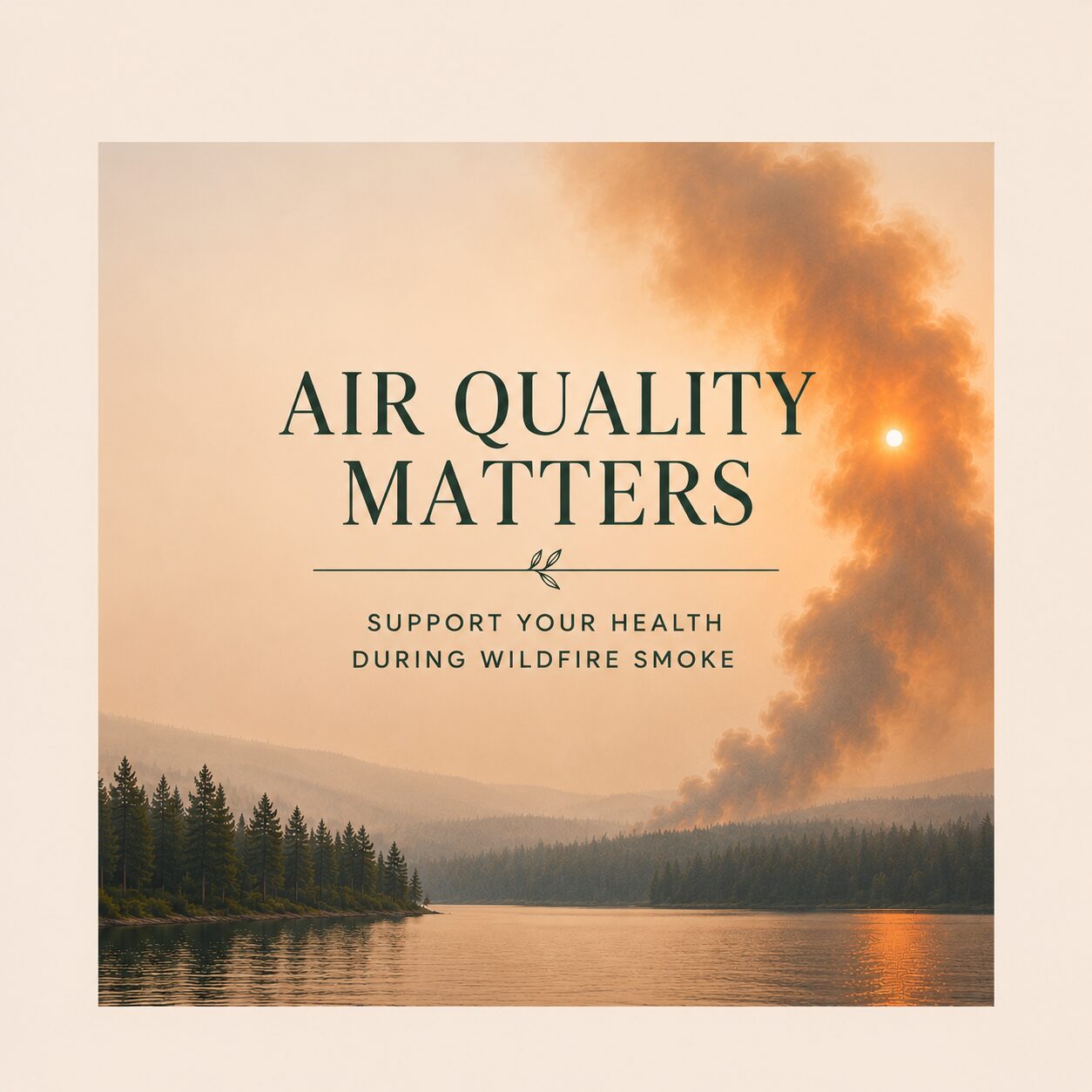
As wildfire smoke becomes a more frequent part of summer, many of us are paying closer attention to the Air Quality Index (AQI)—and for good reason. While smoke can be an inconvenience, it can also have meaningful effects on our health, particularly for children, older adults, pregnant individuals, and those with asthma, cardiovascular disease, or chronic inflammatory conditions.
Wildfire smoke contains tiny particles (PM2.5), volatile organic compounds (VOCs), and other combustion byproducts that can penetrate deep into the lungs and even enter the bloodstream. While limiting exposure is always the first priority, there are several practical ways to support your body during periods of poor air quality.
1. Reduce Your Exposure
If the AQI is above 100, consider limiting prolonged outdoor exercise and recreational activities. Keep windows closed when possible, use a HEPA air purifier indoors, and wear a well-fitting N95 respirator if you must spend extended time outside in smoky conditions. The less smoke your body has to process, the better.
2. Prioritize Hydration
Adequate hydration is one of the simplest—and most overlooked—ways to support your body’s natural defense systems.
Smoke can dry and irritate the airways, making hydration important for maintaining healthy mucus production. Mucus serves as one of the body’s first lines of defense, helping trap inhaled particles before they reach deeper into the lungs. Proper hydration also supports circulation, kidney function, and overall metabolic health.
Aim to drink clean, filtered and mineralized water consistently throughout the day, and consider adding electrolytes if you’re sweating heavily or spending time outdoors.
3. Don’t Underestimate Sleep
Sleep is when your body performs much of its repair and recovery. Poor sleep has been linked to increased inflammation, impaired immune function, and greater oxidative stress—all of which may make it more difficult for your body to recover from environmental exposures.
During periods of poor air quality, prioritize a consistent sleep schedule and create an environment that promotes restorative rest.
4. Nourish Your Body with Anti-Inflammatory Foods
Your diet plays an important role in supporting your body’s response to oxidative stress.
Focus on foods rich in antioxidants and phytonutrients, including:
- Colorful fruits and vegetables
- Leafy greens
- Berries
- Citrus fruits
- Cruciferous vegetables
- Herbs and spices like turmeric and ginger
- Omega-3-rich foods such as salmon, sardines, walnuts, and flaxseed
These foods provide vitamins, minerals, and plant compounds that help support the body’s normal inflammatory response and antioxidant defenses.
5. Support Your Body’s Master Antioxidant: Glutathione
Glutathione is often referred to as the body’s master antioxidant because it plays a central role in protecting cells from oxidative damage.
It helps neutralize free radicals generated by pollution and smoke exposure while also participating in the liver’s detoxification processes.
Some individuals may benefit from glutathione supplementation—particularly during times of increased environmental exposure. Liposomal glutathione or precursors such as N-acetylcysteine (NAC) may be appropriate in certain situations, though it’s always best to discuss supplementation with your healthcare provider, especially if you have underlying medical conditions.
6. Support Your Natural Detoxification Pathways
When we hear the word “detox,” it’s important to remember that your body already has sophisticated detoxification systems. The goal isn’t to force detoxification—it’s to support the organs and pathways that already do the work.
Some practical ways to support these systems include:
- Eating adequate protein to provide the building blocks needed for liver detoxification.
- Including sulfur-rich foods such as garlic, onions, broccoli, Brussels sprouts, and cabbage.
- Supporting healthy bile production and flow through adequate fiber, healthy fats, and regular meals, since many toxins are eliminated through bile and the digestive tract.
- Maintaining regular bowel movements to help prevent compounds from being reabsorbed.
- Sweating through exercise or sauna use (when appropriate) may contribute modestly to elimination of certain substances while also supporting cardiovascular health. Be sure to replace fluids and electrolytes afterward.
7. Manage Stress
Chronic stress doesn’t just affect your mental health—it also influences immune function, inflammation, sleep quality, and recovery.
During wildfire season, prioritize activities that help regulate your nervous system, such as:
- Gentle indoor movement
- Deep breathing exercises (performed indoors with clean air)
- Meditation or mindfulness
- Time with loved ones
- Reading or other relaxing hobbies
A calmer nervous system supports better recovery across multiple body systems.
The Bottom Line
Wildfire smoke isn’t something we can completely control, but we can reduce our exposure and give our bodies the resources they need to stay resilient.
Hydration, restorative sleep, nutrient-dense anti-inflammatory foods, stress management, regular movement, and supporting your body’s natural antioxidant and detoxification systems can all contribute to overall health during periods of poor air quality.
Your body is remarkably equipped to protect itself. Supporting those natural systems can make a meaningful difference when the air outside isn’t at its best.
Questions about optimizing your health or reducing your toxic burden? Schedule a consultation to create a personalized plan.