
So you’ve been recommended a mitochondrial cofactor—NAD, CoQ10, or another supplement—with the promise of “all-encompassing mitochondrial support.”
That is a substantial promise for one component of a complex biological system.
CoQ10 and NAD have important roles in cellular metabolism. But an expensive NAD infusion does not guarantee healthier mitochondria, and taking CoQ10 does not automatically address whatever is limiting your energy production. Understanding why requires looking beyond the supplement being sold.
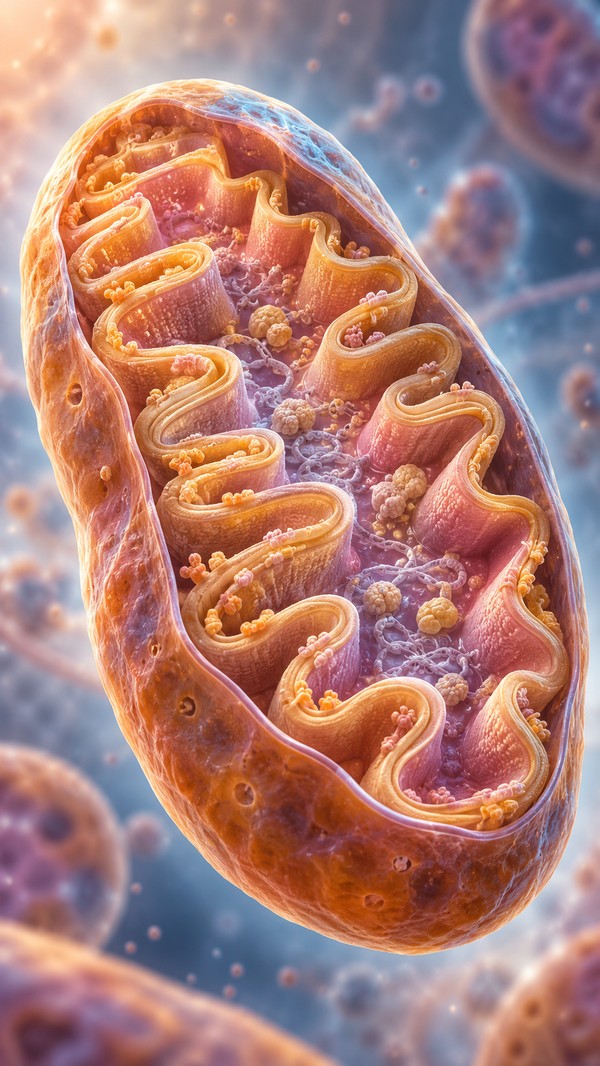
How mitochondria actually generate ATP
ATP is the energy currency cells use to power countless processes, from muscle contraction to maintaining essential chemical gradients.
Mitochondria generate much of this ATP through oxidative phosphorylation. First, food metabolism supplies electron carriers, including NADH, that deliver electrons to the electron transport chain in the inner mitochondrial membrane.
This chain contains four main protein complexes. As electrons move through the system, complexes I, III, and IV use the released energy to pump hydrogen ions from the mitochondrial matrix into the intermembrane space. Complex II supplies electrons without pumping hydrogen ions.
This creates an electrochemical gradient: a difference in both hydrogen-ion concentration and electrical charge across the membrane.
Hydrogen ions then flow back into the matrix through ATP synthase, sometimes called Complex V. This flow powers the conversion of ADP and phosphate into ATP. Oxygen accepts electrons at the end of the chain, forming water.
CoQ10 shuttles electrons within this system. NAD participates in the reactions that collect and transfer electrons from fuel metabolism. Both matter—but neither runs the entire operation.
What else does mitochondrial function depend on?
Energy production requires adequate oxygen delivery and usable fuel. It also depends on sufficient nutrients and cofactors, properly functioning enzymes, and the structure and integrity of mitochondrial membranes.
Membrane composition matters because the electron transport chain operates within that membrane. Maintaining the hydrogen-ion gradient is essential to efficiently coupling electron transfer with ATP production.
Mitochondria also respond to the conditions surrounding them. Inflammation, certain environmental exposures, illness, and other physiological stressors can alter their function. Sleep and circadian rhythms help regulate mitochondrial metabolism, while physical activity influences mitochondrial adaptation.
Supplying one cofactor may help in a relevant clinical context, particularly when a specific deficiency or indication exists. But adding more of one ingredient does not necessarily improve the whole process.
The important question is: what is actually limiting function in this person?
Mitochondria also participate in cellular defense
Describing mitochondria only as cellular powerhouses leaves out much of their biology. They also participate in immune signaling, stress responses, and the regulation of cell survival and death.
Robert Naviaux’s cell danger response theory offers a framework for understanding these broader roles. It proposes that threats can trigger coordinated metabolic changes involving mitochondria, helping cells protect themselves and communicate danger.
Within this model, a protective response may contribute to chronic illness when it persists instead of resolving appropriately. The broader theory remains an evolving scientific framework; it should not be treated as proof that every fatigued person has mitochondria “stuck in defense mode.”
It does, however, reinforce why mitochondrial health cannot be reduced to maximizing ATP production.
The marketing needs to match the evidence
My frustration lies in selling this complex biology as something you can comprehensively optimize with a drip and a hefty price tag.
Knowing that a molecule participates in a pathway is different from demonstrating that administering it improves someone’s health.
Thoughtful care considers symptoms, medical conditions, nutrition, sleep, activity, and relevant exposures before deciding whether supplementation makes sense.
Before purchasing “all-encompassing mitochondrial support,” seek care from someone who understands mitochondrial biology—and asks what your individual situation actually requires first.